
Specialty treatments · Keratoconus
CTAK: reshaping the cornea in keratoconus
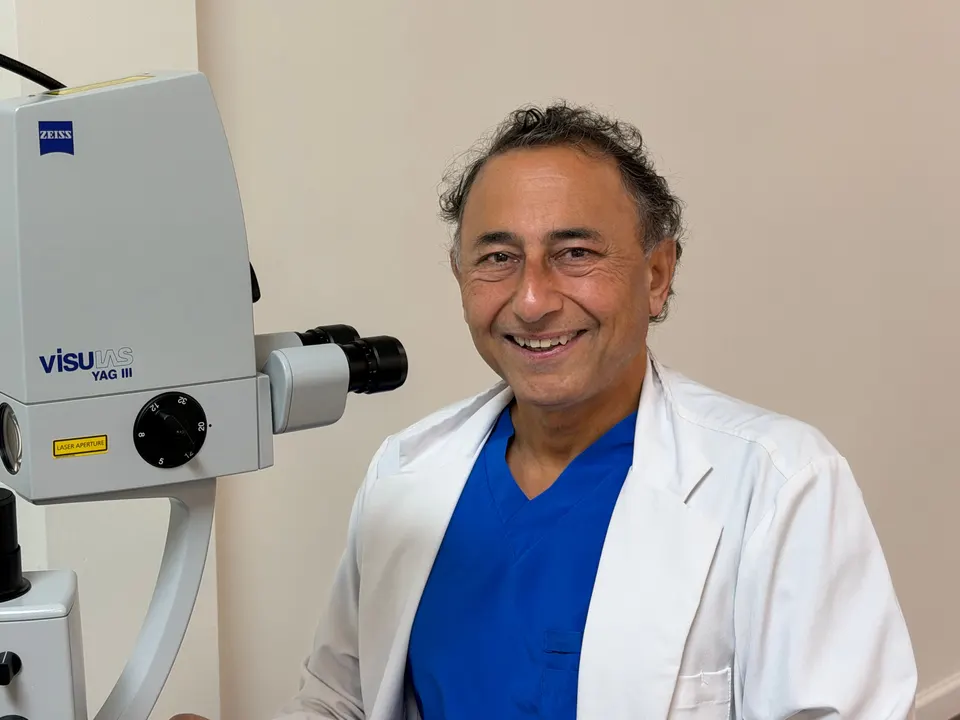
Reviewed by Rajesh Khanna, MD
CTAK (corneal tissue addition for keratoconus) adds a custom-shaped piece of sterilized donor corneal tissue into a small channel made by a femtosecond laser. The added tissue is designed to reshape the cone toward a more regular curve. It is not a corneal transplant, and it is different from cross-linking.
How it works
What CTAK is
In keratoconus the cornea thins and bulges into a cone, which blurs and distorts vision. Glasses often stop working well, and rigid contacts can be hard to tolerate.
CTAK starts with a detailed map of your cornea. Donor tissue is processed so no living donor cells remain, then cut by laser to a shape planned from your map. Dr. Khanna places it in a channel made with a femtosecond laser, without stitches.
Cross-linking and CTAK do different jobs. Cross-linking aims to strengthen the cornea and slow progression; CTAK aims to improve the corneal shape. For cross-linking, see corneal cross-linking.

Candidacy
Are you a candidate for CTAK?
Whether CTAK fits you depends on your corneal maps, thickness and history.
Often a good fit
- Keratoconus that limits vision
- Poor results with glasses or contacts
- Enough corneal thickness, confirmed by imaging
- Realistic goals about glasses or contacts afterward
May not be right, or not yet
- Dense central scarring that may need a transplant
- Active eye infection or inflammation
- Corneas too thin for a channel
Procedure day
Your CTAK journey
Keratoconus exam
Detailed corneal mapping at a $395 VIP lifestyle exam (self-pay) or an annual eye exam through insurance.
Custom tissue
Your map is used to plan the tissue shape, which is laser-cut before surgery.
Procedure
Numbing drops and light sedation. The laser makes a channel and the tissue is placed, with no stitches.
Follow-up
A written schedule for drops, screens and activities, with frequent visits while the eye settles.
Recovery
Recovery
Most people need some days of rest and frequent follow-up while the eye settles, and vision continues to change for weeks.
First days
Scratchiness and light sensitivity are common. Rest at home.
First week
Many people return to screens, then work or school, as cleared.
Weeks to months
Vision continues to change as the cornea settles. Glasses or contacts are refit once it is stable.
Call the surgical team right away for increasing pain, sudden vision loss, marked redness or discharge.
Benefits and risks
The honest version
Why people consider CTAK
- Aims to improve the corneal shape, not only slow progression
- Not a full corneal transplant
- Glasses or contacts are often easier to use afterward
- Tissue can be removed or adjusted if needed
What no one can promise
CTAK is corneal surgery. Possible risks include infection, inflammation, haze, under- or over-correction, glare and halos, and the need for further treatment.
Results vary with the stage of keratoconus. Many patients still need glasses or contacts, and we cannot promise a specific level of vision.
Your surgeon
The technology is advanced. The judgment is personal.
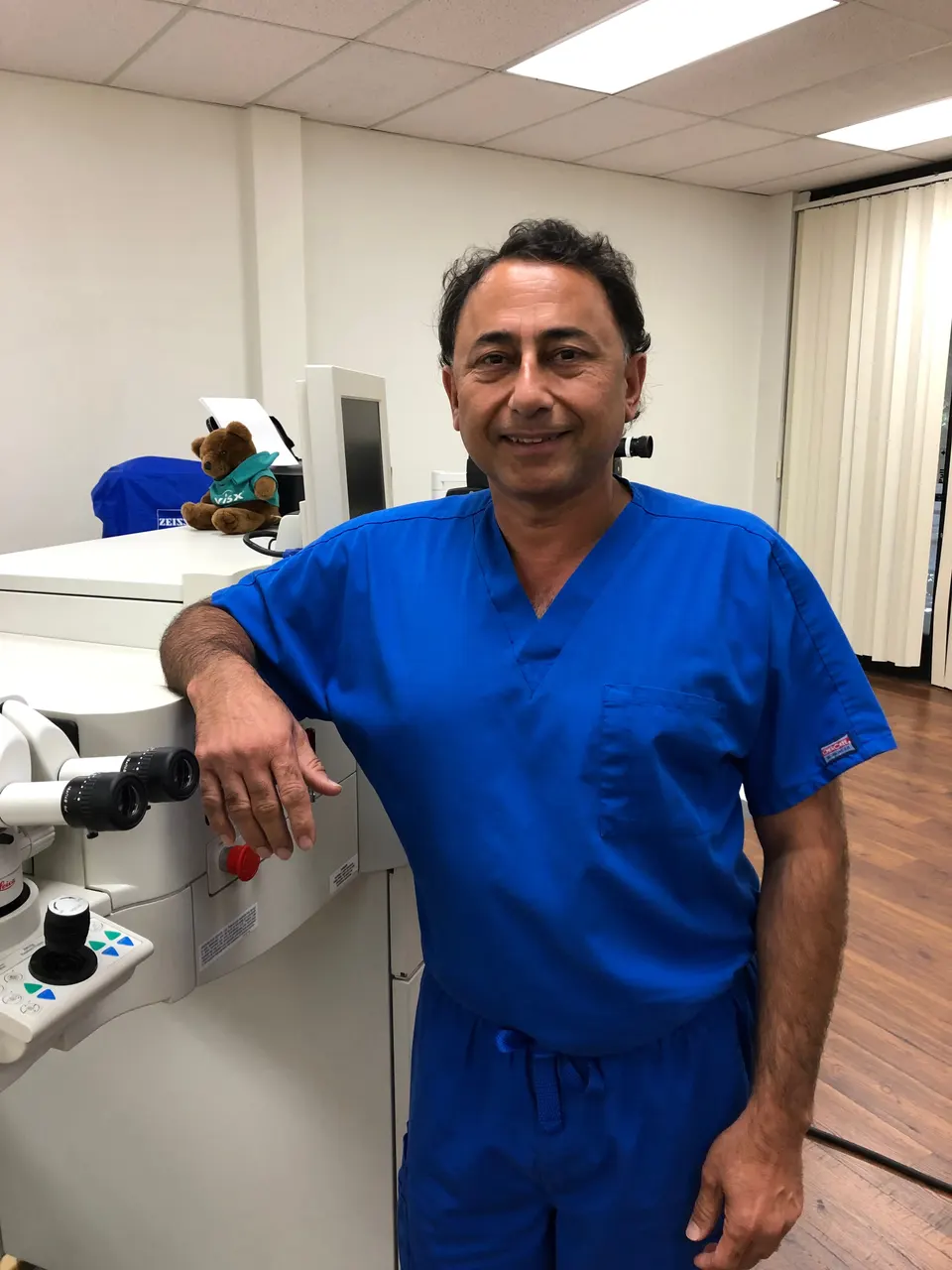
Rajesh Khanna, MD is a UCLA clinical instructor with 25+ years in practice and 25,000+ vision procedures.
At your visit, Dr. Khanna decides whether surgery is the right choice, which procedure fits your eyes, and how to manage the result. The aim is the safest path to the vision that matters in your life, not the newest procedure for everyone.
"I've operated on my own mother, my wife and my son." (Dr. Khanna)
About Dr. KhannaCost and financing
Exams, insurance and cost
Keratoconus care starts with an exam, because the decision depends on detailed corneal imaging. Self-pay patients book the $395 VIP lifestyle exam. Insurance patients book an annual eye exam; bring your medical insurance card. Insurance rules apply.
CTAK pricing is provided at your exam, once we know your plan and whether medical insurance applies. Epioxa cross-linking is offered with insurance approval only.
Want to learn about keratoconus first? Ask our team for keratoconus education materials.
We have dropped, and will continue to drop, HMO and optical (vision) insurance plans. For questions about a specific plan, call (310) 482-1240.
Not a candidate for CTAK?
- Corneal cross-linking: to slow progression
- Specialty contact lenses: scleral or rigid lenses
- Corneal transplant: for advanced scarring
CTAK questions
Is CTAK the same as cross-linking?
No. Cross-linking aims to strengthen the cornea and slow progression. CTAK aims to improve the corneal shape. Cross-linking is offered as Epioxa (epi-on), with insurance approval only.
Is CTAK a corneal transplant?
No. CTAK adds tissue to your own cornea rather than replacing a full-thickness section of it. Your surgeon explains how that compares with transplant options for your stage of keratoconus.
Do you still offer Intacs?
No. Intacs are no longer offered. CTAK is the treatment we use instead.
What is the first visit?
Keratoconus care starts with the $395 VIP lifestyle exam (self-pay) or an annual eye exam through insurance, because the decision depends on detailed corneal imaging.
How much does CTAK cost?
Pricing is provided at your exam, once we know your plan and whether medical insurance applies.
Will I still need glasses or contacts?
Often, yes, but many patients find glasses or contacts easier to use once the cornea is more regular.
VIP consult
Request a keratoconus exam
Tell us whether you’re self-pay or using insurance, and our team will book the right exam.
- Self-pay: $395 VIP lifestyle exam
- Insurance: annual eye exam (bring your medical insurance card)
- Keratoconus education materials on request
Beverly Hills: Monday and Thursday · Westlake Village: Tuesday, Wednesday and Friday · 8 AM–5 PM, last appointment 4 PM. Saturday by arrangement only: please call.
Sources
- American Academy of Ophthalmology: Keratoconus
- American Academy of Ophthalmology: Corneal cross-linking
Medically reviewed by Rajesh Khanna, MD (review pending before launch). This page is educational and does not replace an exam. Eligibility, risks, benefits, alternatives and recovery are reviewed with your surgeon. Results vary.